
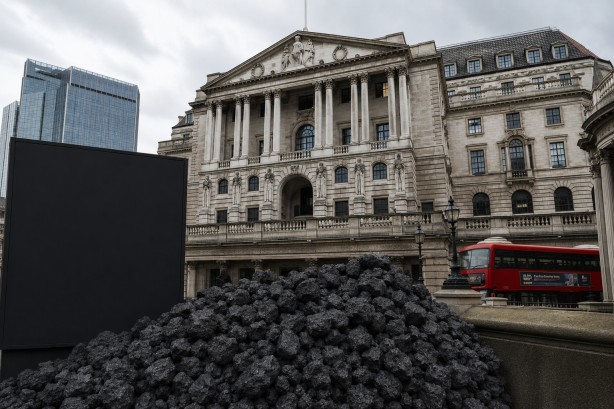
In a decisive move to tackle climate-related financial risks, the Bank of England has declared that, starting in October, it will cease accepting bonds linked to thermal coal companies as collateral for its lending operations. This policy shift marks a significant development in the central bank’s efforts to address environmental concerns within the financial sector.
When commercial banks, including major lenders, need to borrow funds from the central bank to support daily operations and transaction settlements, they typically use bonds as collateral. However, under the new guidelines, any bonds associated with thermal coal—the primary fossil fuel used in electricity generation—will be deemed ineligible for such purposes.
According to the central bank, the rationale behind this decision is the increasing financial risk faced by companies involved in thermal coal, as countries worldwide are accelerating their transition toward cleaner energy sources and striving for net-zero emissions. Consequently, assets tied to coal are at risk of depreciating over time.
The policy also empowers the Bank of England to implement discounts on bonds from other sectors susceptible to climate risks, with the aim of safeguarding its balance sheet against potential losses. This initiative has been welcomed by environmental groups, who believe it sends a robust message to financial markets and could prompt commercial banks to minimize their involvement with industries that have a high environmental impact. Notably, over 150 leading financial institutions globally have already imposed limitations on businesses connected to the thermal coal sector.
Analysts highlight that the success of this policy will largely depend on the evaluation of climate risks and whether similar strategies are eventually applied to other environmentally detrimental activities. This step by the Bank of England signifies a broader commitment to integrating climate considerations into financial practices, potentially setting a precedent for future regulatory measures.