
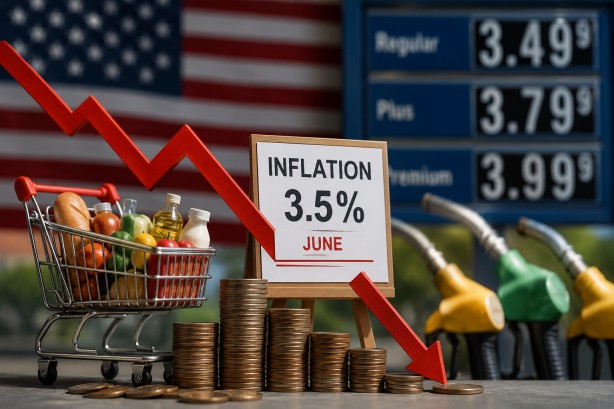
The United States witnessed a deceleration in annual inflation to 3.5% in June, largely attributed to a temporary drop in energy prices that helped to lower overall consumer costs. The latest Consumer Price Index (CPI) data reveals this easing of inflation, marking a notable shift from the higher levels seen in recent months. A significant 0.8% decline in prices from May was largely driven by reduced gasoline and fuel costs, which managed to counterbalance rising expenses in areas such as food, housing, and utilities.
Core inflation, a critical measure for the Federal Reserve that excludes the more volatile food and energy sectors, also showed a decrease, settling at 2.6% on an annual basis. This measure is closely scrutinized by policymakers to gauge underlying inflation trends. However, the recent decline in inflation might be transient, as geopolitical tensions in the Middle East have already started pushing global oil prices upward again, leading to increased fuel costs for consumers and higher operational expenses for industries like aviation and transportation.
The Federal Reserve is set to evaluate the latest inflation figures in conjunction with labor market conditions during its forthcoming policy meeting later this month. Despite the moderation in inflation rates, they still exceed the central bank’s long-term target of 2%. This situation leaves some uncertainty regarding the timing of any potential adjustments to interest rates, as the Fed balances between curbing inflation and supporting economic growth.
The cooling of inflation rates provides some relief to consumers who have been grappling with rising everyday costs. Yet, the renewed surge in crude oil prices serves as a reminder of the volatility that can impact the economic landscape. As the Fed deliberates its next moves, the interplay between inflation trends and broader economic conditions will remain under close observation, with implications for both short-term consumer experience and long-term economic strategy.