
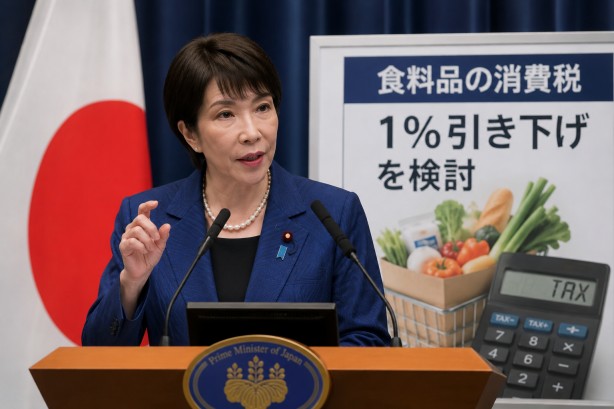
The Japanese government is moving towards implementing a significant tax reform aimed at alleviating the financial burden on consumers. Prime Minister Sanae Takaichi is anticipated to direct the ruling Liberal Democratic Party to advance a proposal that would temporarily reduce the consumption tax on food items from 8% to 1%. This change is planned to take effect for a two-year period beginning in April 2027.
This initiative emerges amidst a stalemate in cross-party discussions concerning tax reforms. The government, along with its ruling coalition, supports the idea of a provisional tax reduction coupled with financial aid for low- and middle-income families. The comprehensive proposal sets aside approximately ¥600 billion in financial assistance to help ease the cost-of-living pressures faced by these households.
Efforts to finalize this policy are underway, with a target to complete the process by early August. This timeline is crucial to allow for the introduction of the necessary legislative measures during an extraordinary parliamentary session later in the year. The goal is to ensure that these measures are in place by the coming April.
The proposed tax cut and financial aid package are part of the government’s broader strategy to support households amid economic challenges. By addressing the immediate costs associated with essential food items, the government aims to provide relief to many struggling with rising living expenses. The legislative process and the outcome of these deliberations will be closely watched, as they have significant implications for economic policy and consumer welfare in Japan.